


- Why You’ll Love These Low-Carb Cottage Cheese Pancakes
- Key Ingredients
- How to Make These Low-Carb Pancakes
- Tips for the Best Low-Carb Cottage Cheese Pancakes
- Ingredient Substitutions
- Low-Carb Flavor Variations
- Low-Carb Topping Ideas
- How to Store and Reheat
- FAQ
- More High-Protein Breakfast Recipes
- The Recipe
- More recipes you’ll love
It’s no secret that eating a high-protein breakfast is one of the best things you can do for your hunger levels throughout the day. Protein suppresses ghrelin, your hunger hormone, in a way that a carb-heavy breakfast just doesn’t. Fewer cravings, more stable energy, and greater satiety throughout the day.
And when you layer on lower carb, you get the added benefit of steadier blood sugar. No mid-morning crash, no 11am slump. Just consistent energy from a breakfast that actually does its job.
But here’s the thing. You don’t have to give up the foods you actually want to eat to get there. Pancakes are not off the table.
That’s where these low-carb cottage cheese pancakes come in. Blended cottage cheese creates a naturally creamy, thick batter that cooks up golden and fluffy, and with 20g of protein and only 8g of net carbs per serving, they earn their place in your morning rotation without asking you to compromise on anything.
8g net carbs. 20 minutes. One blender. Let’s get into it.

Why You’ll Love These Low-Carb Cottage Cheese Pancakes
- High protein, low carb: 20g of protein and 8g net carbs per serving. For context, a standard stack of wheat flour pancakes can run 45g+ of carbs with a fraction of the protein.
- One blender, zero cleanup spiral: Everything goes in, you blend, you cook. No separate bowls, no sifting, no whisk to scrub at 7am.
- Actually fluffy: The almond flour and cottage cheese create a fluffy creamy texture on the inside and crisp edges on the outside.
- Naturally gluten-free: No wheat flour, no substitutions required. It’s just how the recipe is built.
- Meal prep-friendly: Make a batch and reheat all week.
Love cottage cheese? Check out these 11 Cottage Cheese Breakfast Ideas for more high-protein ways to incorporate it into your breakfast.
Key Ingredients
- Full-fat cottage cheese: The protein base of the batter. Full-fat versions blend smoother and brown better than low-fat.
- Almond flour: Provides body and a slightly nutty flavor. Use finely ground almond flour, not almond meal as the texture difference is significant.
- Eggs: Bind the batter and add additional protein. Don’t skip these.
- Vanilla extract: Rounds out the flavor so these taste like actual pancakes, not savory egg cakes.
How to Make These Low-Carb Pancakes

Blend the batter
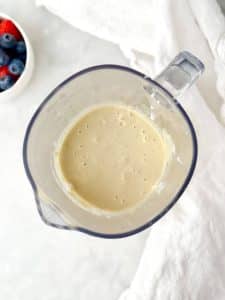
Add the almond flour, cottage cheese, eggs, vanilla extract, and baking powder to a blender or food processor. Blend for 15 to 20 seconds until smooth and thick. Let the batter sit for 5 minutes while you preheat the pan.

Cook
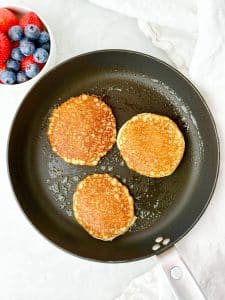
Heat a nonstick skillet over medium-low heat. Add butter or neutral oil and let it fully melt and coat the pan. Scoop about 2 tablespoons of batter per pancake into the skillet. Cook for 3 to 4 minutes until the edges look set and the bottoms are golden brown. Flip carefully and cook for another 2 to 3 minutes until the second side is golden and the center is cooked through.

Serve
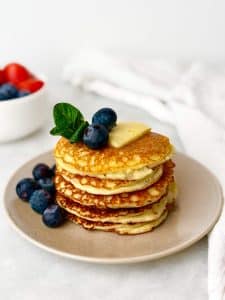
Serve warm with a pat of butter, fresh berries, Greek yogurt, or sugar-free syrup. See the low-carb topping ideas below for more inspiration.
Looking for more low-carb breakfast ideas? Here are 9 High-Protein Low-Carb Breakfast Ideas worth trying.
Save this recipe
Love this recipe? Get it sent to your inbox.
Tips for the Best Low-Carb Cottage Cheese Pancakes
- Use full-fat, small curd cottage cheese. The fat content improves flavor and browning. Fat-free versions have too much moisture and make the pancakes soft and hard to flip.
- Don’t skip the rest period. 5 minutes of resting lets the flour hydrate and thickens the batter. This is what keeps the pancakes from spreading into flat, lacy edges.
- Keep them small. This batter is naturally softer than wheat-based batter. 3-inch pancakes flip cleanly. Larger pancakes are more likely to fall apart mid-flip.
- Medium-low heat is your friend. Too high and the outside burns before the center sets. Too low and they come out pale and soft. Medium is the sweet spot.
- Use a nonstick or well-seasoned cast-iron pan. Cottage cheese batter is stickier than standard pancake batter. A good surface makes all the difference.
Ingredient Substitutions
Need to swap something? Here’s what works and what to watch out for:
- Cottage cheese → Ricotta: Full-fat ricotta is the closest substitute and works well. It blends smooth and has a similar protein content. The flavor is slightly milder.
- Butter → Coconut oil or avocado oil: Both work for cooking. Coconut oil adds a subtle sweetness; avocado oil is neutral.
- Vanilla extract → Almond extract: Use ½ tsp almond extract in place of 1 tsp vanilla for a nuttier, slightly more indulgent flavor.
Low-Carb Flavor Variations
Once you have the base recipe down, these add-ins keep breakfast interesting without adding significant carbs:
- Lemon Ricotta-Style: Add 1 tablespoon of lemon zest and a few drops of lemon extract to the blender with the wet ingredients. Bright, fresh, and pairs perfectly with fresh blueberries on top.
- Cinnamon Brown Butter: Add 1 teaspoon of cinnamon and a pinch of nutmeg to the dry ingredients. Brown the butter in the pan before adding batter for a warm, caramel-adjacent vibe.
- Chocolate Chip (Low-Carb): Fold in 2 tablespoons of Lily’s sugar-free chocolate chips after blending.
- Pumpkin Spice: Add 2 tablespoons of pure pumpkin puree and ½ teaspoon of pumpkin pie spice to the blender with the wet ingredients. Adds minimal carbs, maximum fall energy.
- Matcha: Whisk 1 teaspoon of ceremonial-grade matcha into the dry ingredients before blending. Earthy, slightly sweet, and unexpectedly good with a dollop of coconut cream on top.

Low-Carb Topping Ideas
If you want to skip the maple syrup, here are some low-carb options you can top your pancakes with:
- Fresh berries: Strawberries, blueberries, and raspberries are the lowest-carb fruit options and add natural sweetness without a sugar spike.
- Greek yogurt: A spoonful of full-fat Greek yogurt adds creaminess and even more protein. The tang balances the mild sweetness of the pancakes.
- Sugar-free syrup: Lakanto maple-flavored syrup is the closest to the real thing without the carbs. A little goes a long way.
- Nut butter drizzle: A thin drizzle of almond butter or peanut butter adds healthy fats and rich flavor.
- Whipped coconut cream: Chill a can of full-fat coconut milk overnight, scoop the solids, and whip with a touch of sweetener. Feels indulgent, keeps it dairy-free if needed.
- Chia jam: Simmer ½ cup of raspberries or strawberries with 1 tbsp chia seeds for 5 minutes. A thick, low-sugar fruit spread that takes these to another level.
- Crushed nuts: Chopped pecans, walnuts, or slivered almonds add crunch and healthy fat with zero sugar.
Looking for breakfasts you can prep once and enjoy all week? These 11 High-Protein Breakfast Meal Prep Ideas each have 30+ grams of protein and are perfect for prepping ahead.
How to Store and Reheat
- Refrigerator: Store cooled pancakes in an airtight container in the fridge for up to 4 days. Layer with parchment paper between pancakes to prevent sticking.
- Freezer: These freeze well, too. Lay cooled pancakes flat on a parchment-lined baking sheet and freeze for 1 hour, then transfer to a zip-lock freezer bag. Keeps for up to 2 months. Reheat straight from frozen.
And when you’re ready to reheat and enjoy, here are the best strategies ranked from best to worst:
- Toaster: Best for restoring a slightly crisp edge. Works great from frozen.
- Skillet over medium-low: 1 to 2 minutes per side. Keeps the texture closest to fresh.
- Microwave: 30 to 45 seconds. Quick, but softens the texture. Fine for a fast weekday breakfast.
FAQ
Yep, when made with almond flour instead of all-purpose flour, these come in at 8g of net carbs per serving. Traditional pancakes made with wheat flour can have 45g or more of carbs for a similar serving size.
Not at all. Blending the cottage cheese removes all trace of the curds and most of the tangy flavor. What you get is a creamy, mildly sweet batter that tastes like a proper pancake.
A few likely culprits: the pancakes are too large (keep them to about 3 inches), the batter didn’t rest long enough (give it the full 5 minutes), or the pan isn’t hot enough when you add the batter. Make sure the butter is fully melted and the pan is at medium-low heat before scooping.
You can, but the results won’t be as good. Low-fat cottage cheese has a higher water content, which makes the batter looser and the pancakes softer and harder to flip. Full-fat is strongly recommended for the best texture and browning.
More High-Protein Breakfast Recipes


Low-Carb Cottage Cheese Pancakes
Save this recipe
Love this recipe? Get it sent to your inbox.
Ingredients
Instructions
- Add ¾ cup finely ground almond flour, ½ cup full-fat cottage cheese, 2 large eggs, 1 tsp vanilla extract, and 1 tsp baking powder to a blender or food processor.Blend for 15 to 20 seconds until the batter is smooth and thick.Let the batter sit for 5 minutes while you preheat the pan.(This allows the almond flour to absorb moisture and helps the pancakes hold together when cooking.)
- Heat a nonstick skillet over medium-low heat.Add butter or neutral oil and allow it to fully melt and lightly coat the surface of the pan.Using enough fat helps the pancakes develop golden edges and prevents sticking.
- Scoop about 2 tablespoons batter per pancake into the skillet to form small pancakes.Cook for 3 to 4 minutes until the flip carefully and cook another 2 to 3 minutes until cooked through.Add more butter or oil between batches as needed.
- Serve warm with a pad of butter, fresh berries, yogurt, or sugar-free syrup.
Nutrition
Notes

Pin this Recipe
Save this Low-Carb Cottage Cheese Pancakes to Pinterest so you can easily find it again later.


A really tasty option if you’re looking for a low-carb high-protein breakfast that’s a little special.